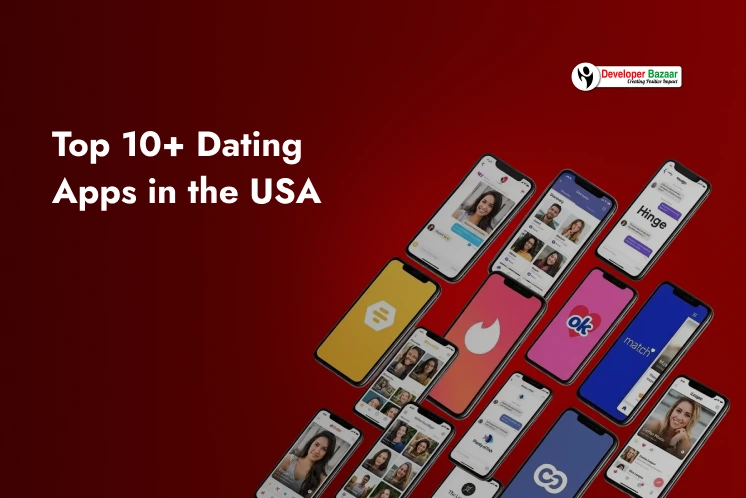

The global dating services market is projected to reach $8.43 billion in 2026 and grow to $9 billion by 2030. Whether you’re an entrepreneur, investor, or tech founder, understanding why dating apps continue to thrive and what features drive that growth is essential before you invest a single dollar in development.
Remember when dating apps were considered a novelty? That time is long gone.
Over the past decade, dating platforms have undergone a fundamental transformation from basic swipe-based interfaces into sophisticated, AI-driven ecosystems that cater to hundreds of millions of users across cultures, orientations, and age groups.
As per the reports of Business of Apps, dating apps are already a huge global business. More than 350 million people around the world use dating apps, and nearly 23 million users pay for premium features. This clearly shows that people are willing to spend money for better dating experiences.
Dating apps are especially popular among young users. Around 35% of adults aged 18–29 regularly use online dating platforms, making them one of the most common ways people meet today.
The market is also expected to keep growing steadily in the coming years. Increasing smartphone usage, changing relationship trends, and the demand for more personalized experiences are driving the growth of the online dating industry.
Also, Statista Report said revenue in the online dating market is expected to grow at a CAGR of 2.03% from 2026 to 2030, steady, defensible growth driven by rising smartphone penetration, post-pandemic normalization of digital relationships, and a user base that increasingly expects curated, personalized experiences over chance encounters.
So what exactly makes investing in dating app development a smart business move right now? Let’s break it down.
Also Read: How Much Does It Cost to Make an App Like Tinder?
Top 12 Benefits of Dating App You Must Know About
Benefit 1: AI-Powered Matchmaking Dramatically Improves User Retention
The Problem with Old-School Matching
Early dating apps asked users to make snap judgments based on a photo and a short bio. The result? High churn rates, shallow connections, and frustrated users who deleted the app within weeks.
How AI Changes the Equation
Modern dating platforms use machine learning algorithms that go far beyond appearance and location. They analyze:
- Behavioral signals – which profiles a user lingers on, responds to, or skips
- Communication style – response time, message length, conversation depth
- Shared values and interests – extracted from in-app activity and profile data
- Long-term compatibility markers – not just who you click with today, but who you’re likely to build something lasting with
The result is a dramatically higher match quality, and users who trust the platform enough to stay, pay, and refer others.
Why this matters for your business: Better matches = longer sessions = higher lifetime value per user. AI-driven matchmaking is no longer a differentiator; it’s table stakes for any serious dating app in 2026 and beyond.
Benefit 2: Multiple Revenue Streams Make Dating Apps Highly Profitable
Dating apps have cracked one of the hardest problems in consumer tech: getting users to pay willingly.
The Monetization Playbook
Freemium + Premium Subscriptions – The free tier attracts users; the premium tier converts them. Premium features typically include:
- Unlimited swipes
- Profile visibility boosts
- Advanced search filters
- The ability to see who liked you before you match
In-App Purchases – One-time purchases like “Super Likes,” profile boosts, or virtual gifts generate significant impulse revenue without requiring a subscription commitment.
Advertising – Free-tier users represent a monetizable audience for targeted, relevant ads, particularly from lifestyle, wellness, and fashion brands.
Niche Premium Tiers – Some platforms charge for access to verified, vetted user pools, a particularly compelling value proposition for serious daters.
Real-world context: Tinder generated over $1.8 billion in revenue in the previous year through this exact playbook. Bumble, Hinge, and Match Group all operate variations of the same model at scale.
The key insight for developers and investors: the monetization model is proven. The question isn’t whether dating apps make money, it’s whether yours is built to capture its share.
Benefit 3: Global Reach Through Smart Localization
A dating app built only for one market is leaving most of its potential on the table.
What Localization Actually Means in 2026
True localization goes beyond translating the interface into different languages. It means:
- Culturally adapted prompts and profile questions (what’s appropriate to ask in Tokyo differs from what works in Lagos or São Paulo)
- Region-specific matching priorities – some cultures weight family values and religion heavily; others emphasize career or lifestyle
- Local payment method support – critical for emerging markets where credit card penetration is low
Dating apps that invest in genuine localization see dramatically better engagement and retention in non-English-speaking markets. This is one of the largest untapped opportunities in the space right now.
Benefit 4: Safety and Privacy Features Build Trust and Revenue
User safety is no longer just an ethical obligation. It’s a competitive differentiator.
What Modern Dating App Security Looks Like
End-to-End Encryption – All messages and personal data should be encrypted in transit and at rest. Users sharing sensitive personal information need to know it won’t be intercepted or leaked.
Two-Factor Authentication (2FA) – Adding a verification step via SMS code, authenticator app, or biometric dramatically reduces account takeovers and the fake profile problem.
Identity Verification – By 2026, leading apps have implemented photo verification, ID checks, or social media linking to confirm users are who they claim to be. This directly reduces catfishing and romance scams, a major concern that drives user churn.
In-App Reporting and Blocking – Robust moderation tools, with fast human review for serious reports, signal to users that the platform takes their safety seriously.
Benefit 5: Niche and Inclusive Communities Command Premium Loyalty
The mass-market dating app is increasingly giving way to something more powerful, communities built around shared identity.
The Niche App Advantage
When a user feels that an app was built for people like them, their engagement and loyalty are dramatically higher. This is why we’re seeing sustained growth in:
- LGBTQ+-focused platforms that prioritize safety, inclusive identity options, and community features
- Faith-based dating apps connecting users with shared religious values
- Age-specific platforms for seniors, Gen Z, and everyone in between
- Interest-based matching apps built around shared passions like hiking, gaming, veganism, or entrepreneurship
For developers and investors, the strategic implication is clear: you don’t have to beat Tinder. You have to be the undisputed best option for a specific, underserved community, and those communities are often willing to pay more for an experience that truly fits them.
Benefit 6: AI and Gamification Drive Long-Term User Engagement
Getting users to install your app is hard. Keeping them coming back daily is harder. This is where AI-driven engagement loops become invaluable.
What Keeps Users Coming Back
Personalized, Timely Notifications – AI systems that understand your behavior patterns can send notifications that feel relevant, not spammy. A nudge about a profile that closely matches your stated preferences is welcome; a generic “You have new matches!” is ignored.
Conversational AI and Chatbots – Real-time AI assistance, helping users craft better opening messages, suggesting conversation topics, or providing safety guidance, makes the experience feel more supported and less isolating.
Gamification Elements – Features like daily login streaks, “swipe streaks,” or profile completion rewards borrow engagement mechanics from games. They make routine app use feel rewarding rather than transactional.
When done thoughtfully, these features don’t feel manipulative, they feel helpful. And helpful apps get kept.
Benefit 7: Video and Voice Features Accelerate Genuine Connection
Text-based messaging has a fundamental limitation: it’s slow to build trust and easy to fake.
Why Richer Communication Matters
In-App Video Calls – Users who video chat before meeting in person report significantly higher confidence in the connection and lower rates of “catfishing” disappointment. Video calls also reduce the anxiety around first in-person meetings; users already feel like they know the other person.
Voice Messages – Tone of voice conveys personality, humor, and warmth in ways that text simply cannot. Voice messaging has become a popular middle ground between texting and live video calls.
Virtual Date Features – Some platforms now offer structured virtual date experiences, shared activities, games, or watch-together features that give users something to do together rather than just talk about themselves.
Benefit 8: Real-Time Analytics Give You a Continuous Competitive Edge
Data is the operating system of a successful dating app.
What Good Analytics Unlocks
- Feature adoption tracking know exactly which features users love, ignore, or abandon
- Funnel analysis identify where users drop off (registration, first match, first message, first date) and fix the leaks
- A/B testing continuously optimize everything from onboarding copy to notification timing
- Churn prediction flags users showing signs of disengagement before they leave, and intervene with targeted re-engagement
Dating apps that treat analytics as a core product function improve faster than competitors and allocate development resources far more efficiently.
Benefit 9: Social Media Integration Boosts Acquisition and Trust Simultaneously
Connecting dating profiles with social media platforms solves two problems at once.
For users, it reduces friction at signup (no long forms) and adds credibility to profiles (real photos, visible mutual connections).
For platform operators, it provides richer data for matchmaking, reduces the fake profile problem, and dramatically lowers cost-per-acquisition since social login removes a key drop-off point in the signup funnel.
Instagram integration, in particular, allows users to share a curated glimpse of their real life, travel photos, hobbies, and social context, making profiles feel more authentic and three-dimensional than a static headshot and a bio paragraph.
Benefit 10: AR and VR Are Opening the Next Frontier of Digital Dating
This one is forward-looking, but the runway is real.
Also Read: How Much Does It Cost to Create an App Like Hinge?
What’s Already Happening in Dating Apps Businesses
Augmented Reality (AR) – AR features that overlay shared interests, conversation starters, or playful filters onto real-world environments are already appearing in experimental dating features. They turn passive profile browsing into an interactive experience.
Virtual Reality (VR) – VR-enabled virtual dates, attending a digital concert together, exploring a virtual environment, or simply sitting across from each other in a simulated coffee shop, represent a fundamentally new way to establish connection before an in-person meeting.
For users with social anxiety, safety concerns, or long-distance situations, VR dates offer an intimacy that video calls can’t replicate.
The business case: Early movers in AR/VR dating experiences will establish strong differentiation and capture a tech-forward user segment that is growing rapidly, particularly among Gen Z users already comfortable with immersive digital environments.
The Business Case Summary: Why Invest in Dating App Development Now?
| Factor | Why It Matters |
| Market size | $11+ billion by 2027, growing consistently |
| Proven monetization | Subscription, freemium, and in-app purchase models all work |
| Technology tailwinds | AI, AR/VR, and real-time analytics are improving product quality |
| Niche opportunity | Underserved communities actively seek better options |
| User behavior shift | Digital-first relationships are now culturally mainstream |
The window for building a compelling, differentiated dating app is open but it won’t stay open indefinitely. As the market matures, the cost of entry rises and the importance of getting the product right the first time increases.
What to Look for in a Dating App Development Partner
Choosing the right dating app development company plays a major role in the success of your dating app. At Developer Bazaar Technologies, we help businesses build modern, secure, and scalable dating applications with advanced features and smooth user experiences.
Here’s what makes us the right choice:
- Strong experience in dating and social networking app development
- Expertise in AI-powered matchmaking and smart recommendation systems
- Security-focused development to protect user data and ensure safe interactions
- Scalable app architecture that can support rapid user growth and high traffic
- End-to-end support from idea validation and development to post-launch updates and improvements
Our team focuses on building dating apps that are engaging, future-ready, and designed to grow with your business.

Wrapping Up
Dating apps are not a fad, a niche, or a saturated market. They are a growing, evolving, and highly profitable category of consumer software, one that continues to attract investment, users, and innovation in equal measure.
The businesses that succeed in this space will be those that take user trust seriously, invest in genuine AI capability, build for specific communities rather than everyone at once, and treat their analytics as a product function rather than a reporting tool.
If you’re serious about entering this market, the fundamentals are strong. What matters now is execution.
FAQs
1. How much does it cost to develop a dating app?
The cost of dating app development usually depends on the app’s features, complexity, platforms, and technology stack. On average, dating app development costs can range from $15,000 to $100,000 or more based on project requirements.
2. How long does it take to build a dating app?
On average, a dating app can take anywhere between 3 to 9 months to develop, depending on the app size, features, UI/UX design, and third-party integrations.
3. What are the must-have features in a modern dating app?
Some essential dating app features include user profiles, AI-based matchmaking, swipe functionality, real-time chat, video calling, push notifications, geolocation, profile verification, and privacy controls.
4. How do dating apps make money?
Dating apps generate revenue through premium subscriptions, in-app purchases, advertisements, profile boosts, virtual gifts, and exclusive membership plans.
5. Why choose Developer Bazaar Technologies for dating app development?
Developer Bazaar Technologies offers end-to-end dating app development services with expertise in AI-powered matchmaking, scalable architecture, advanced security, and user-focused app experiences tailored to modern market trends.